The Mount Augustus Loop is an easy 69 kilometre drive around the world’s largest rock – with numerous points of interest along the way. The extension to Cattle Pool adds a few kilometres to the journey.
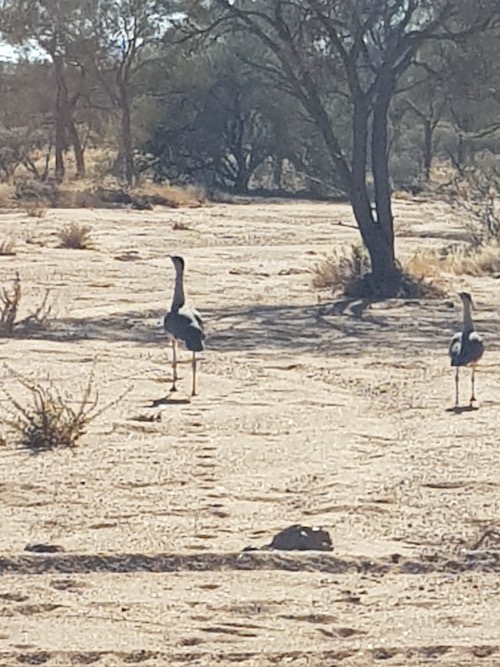
Just after we turned left out of the campground we saw a couple of bustards.
Geologically, Mount Augustus is an asymmetrical anticline or monocline. The more famous Uluru is, however, a monolith – mono (‘one’ or ‘single’) and lithos (‘stone’). Mount Augustus is often referred to as both a monolith and (or) a monocline.
Mount Augustus was named by explorer Frank Gregory (1821-1888) in 1858:
“One hill of considerable elevation … lay directly up the valley of the river, and was ultimately named Mount Augustus, after my brother, now conducting the expedition in quest of the remains of Dr. Leichhardt”.
The Mount Augustus Loop is home to an extensive nest of Dawson’s Burrowing Bees.
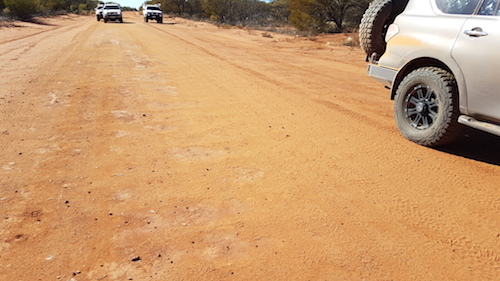
The Dawson’s burrowing bee (Amegilla dawsoni) is a species of bee that nests by the thousands in arid claypans in the Gascoyne. It is one of the largest Australian bees. Each female bee digs her own solitary nest but as they aggregate in large communities it gives the appearance of colonies. The larger males – called majors – aggressively patrol the areas where females emerge from their burrows and will compete in physical fights to mate with virgin or recently mated females. Smaller males – called minors (80% of the male population) – wait at the fringes of the emergence area and mate with females who are able to fly away unmated from the immediate vicinity of their nests.
-
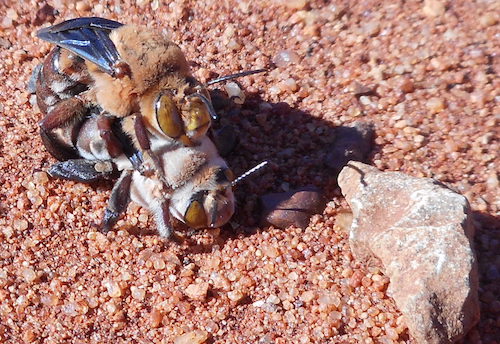
- Bees mating.
Further along the Loop is Ooramboo, then Mundee, a site of significance to the local Wajarri people.
-
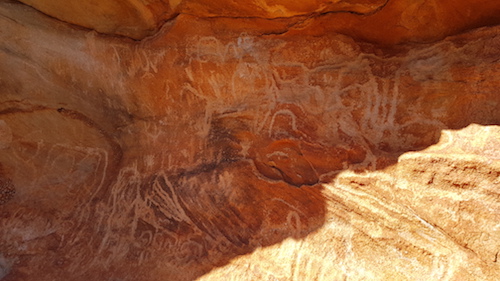
- Mundee petroglyphs.
-
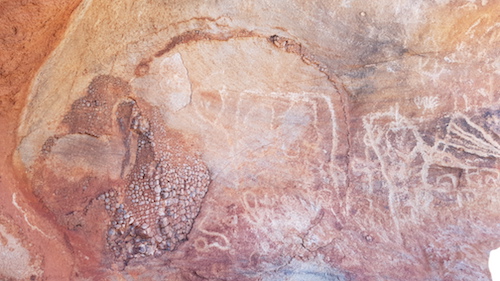
- Petroglyphs at Mundee.
Further along the ‘loop’ road is Flintstone Rock, also known as Beedoboodu. The petroglyphs at this site are hidden under a large slab of rock.
-
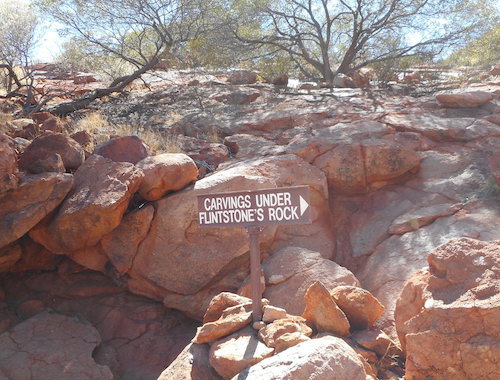
- Sign showing the way.
-
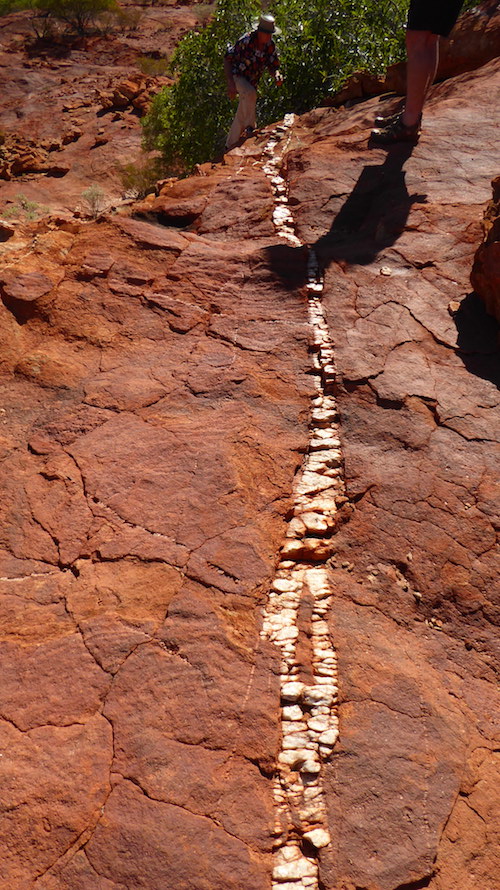
- Interstice at Flinstone Rock.
-
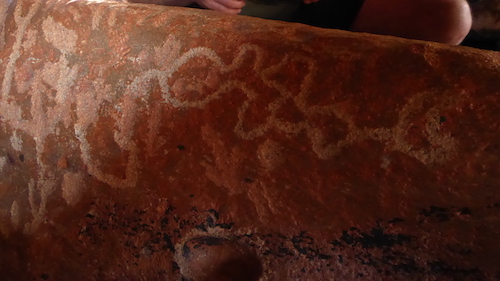
- Petroglyphs.
-
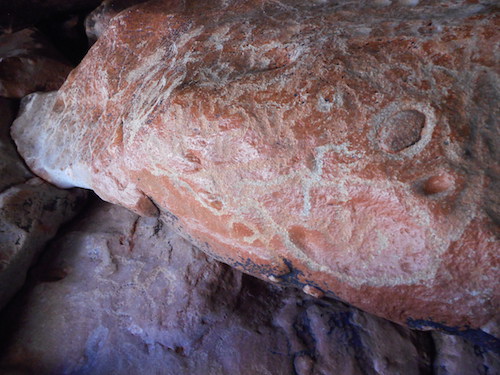
- Petroglyphs.
-
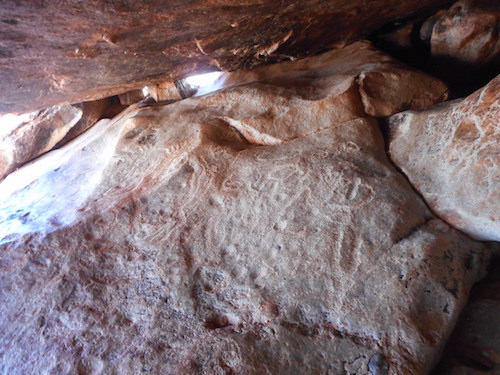
- Petroglyphs.
-
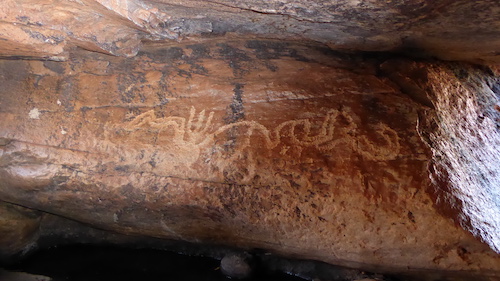
- Petroglyphs.
See other Great Drives of Western Australia.
© Kim Epton 2026
372 words written entirely by the author, not AI.
11 photographs.
You are welcome to use any part of this document. Please attribute wellsandtracks.com.au — it will help your site’s SEO as well as that of wellsandtracks.com.au.
See Terms of Use.